†r*mp Says It's "A Small Price to Pay." He's Not the One Paying It.
- Kal Inois

- 16 hours ago
- 11 min read

The bombs may be falling on Tehran. But the economic shockwaves are landing everywhere: at the gas pump, the grocery store, and on family farms from Missouri to Mumbai.
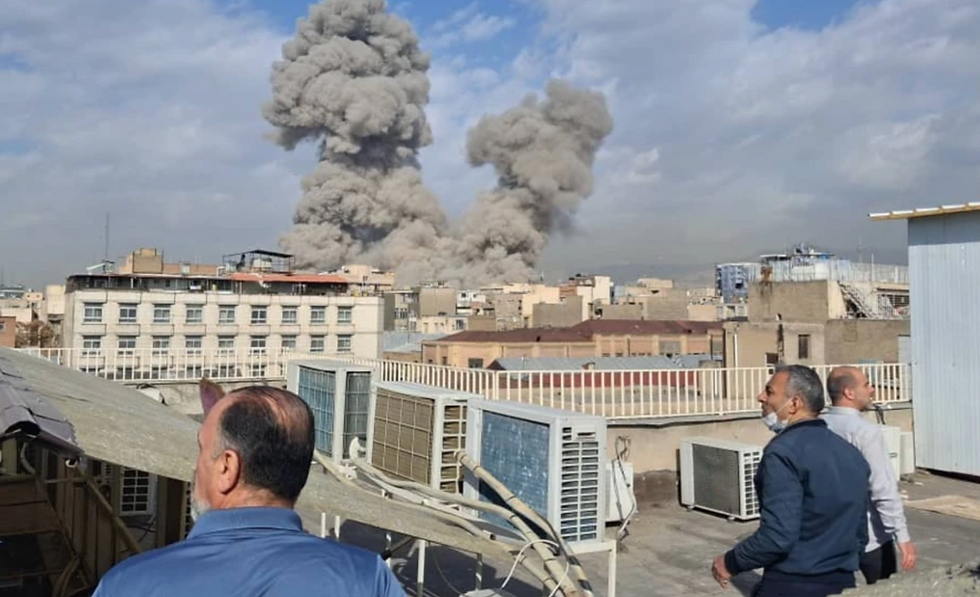
On February 28, 2026, the United States and Israel launched a coordinated military campaign against Iran, codenamed "Øperåtiøn Ėpįc Fůry." Within days, Supreme Leader Ali Khamenei was dead, Iranian military infrastructure was in ruins, and the Strait of Hormuz, one of the most consequential chokepoints on the planet, was effectively closed to commercial shipping.
Donold †r*mp told the American people that rising oil prices were "a very small price to pay" for "safety and peace."
He did not mention the fertilizer.
He did not mention the food.
He did not mention the farms.
Here we will talk about everything he didn't mention — the cascading, interconnected consequences of a war that was sold to the public as a swift, decisive action and is already reshaping the global economy in ways that will be felt for months, if not years.
Why Does the Strait of Hormuz Matter?
The Strait of Hormuz is a narrow waterway between Iran and Oman, connecting the Persian Gulf to the Arabian Sea. On an ordinary day, it carries roughly one-fifth of the world's shipped oil and liquefied natural gas. It is also a critical corridor for fertilizers, aluminum, petrochemicals, and dozens of other industrial commodities.
When it closes, as it has now, the ripple effects are immediate and global.
Here is what is being affected right now.
Oil prices. Brent crude surged from around $70 per barrel before the war to a peak of $119 per barrel on March 2, before settling around $100 as of this week. That's a roughly 43% spike in days. The national average for gas in the United States hit $3.41 per gallon — up $0.43 in a single week — and economists warn prices could climb higher if the disruption continues. The International Energy Agency took the unprecedented step of releasing 400 million barrels from strategic reserves, but analysts say that is a temporary buffer, not a solution.
Natural gas. Qatar — which supplies 20% of global liquefied natural gas — declared "force majeure" on its gas exports after Iranian drone attacks struck its facilities. European natural gas prices nearly doubled overnight. Qatar's gas infrastructure may take at least a month to return to normal production, according to Reuters sources.
Oil production across the Gulf. Kuwait, Iraq, Saudi Arabia, and the United Arab Emirates collectively dropped oil output by a reported 6.7 million barrels per day by March 10. Saudi Aramco's massive Ras Tanura refinery and crude export terminal, the largest in the world, shut down following attacks, with no public timeline for reopening. Storage facilities across the Gulf are filling rapidly, forcing further cutbacks.
Nitrogen fertilizers (urea). The Middle East powers roughly 40–50% of global urea exports. Iran alone is the world's second-largest urea supplier. With the Strait of Hormuz closed, those shipments have stopped. The North American fertilizer price index hit $810 per short ton as of March 9, above its previous one-year peak. Urea prices at the New Orleans fertilizer hub rose from $475 to $680 per metric ton in days. The American Farm Bureau Federation has written directly to the White House warning of a crisis.
Phosphate and sulfur. Nearly 50% of the world's sulfur exports transit the Strait of Hormuz. Sulfur is a critical ingredient in phosphate fertilizers, which are essential for most of the world's food crops. Those shipments have effectively halted.
Ammonia. The Gulf supplies about 20–30% of global ammonia exports, the foundational input for nitrogen fertilizers. Qatar and Saudi Arabia, both major ammonia producers, are now cut off.
Global food security. The UN World Food Programme has issued a direct warning: disruptions to fuel and fertilizer supply chains are "threatening global food security." There is no meaningful strategic reserve for nitrogen fertilizer. Unlike oil, there is no stockpile to cushion the blow. If fertilizers don't arrive during the current spring planting window in the northern hemisphere, reduced yields will filter into global food prices by fall and into next year.
U.S. farms. American farmers are currently in the middle of spring fertilizer purchases and early planting preparations. Product shipped from the Middle East in mid-March was scheduled to arrive in North America in time for April planting. That product is now stranded. One Missouri fertilizer retailer told AgWeb that they are receiving multiple price updates per day. The Farm Bureau President warned that farmers who haven't preordered may not be able to get fertilizer at all this spring. Analysts warn the disruption could shift up to 1.5 million acres from corn to soybeans, reshaping the domestic food and commodity market.
Aviation. Bahrain, Iraq, Israel, Kuwait, Qatar, Syria, and the UAE all closed their airspace after the strikes. Thousands of flights were grounded or rerouted. Emirates Airlines and other major regional carriers have suffered enormous losses. Tourism revenue across the region has collapsed.
Stock markets. The Dow Jones Industrial Average fell more than 400 points on March 2 alone. Regional markets have posted significant losses. Investor confidence is under sustained pressure, with war-risk surcharges rising across the energy sector.
Aluminum, petrochemicals, and industrial goods. The Gulf is a major exporter of aluminum, and disruptions are already pushing aluminum futures higher. Petrochemical inputs — used to produce synthetic fabrics, plastics, rubber, and electronics — transit the Strait in significant volumes. The Asian garment industry is particularly exposed. Supply chain experts warn that it may take only a few weeks for these disruptions to show up as higher prices across a wide range of manufactured goods.
Semiconductors. The Gulf is also a major producer of helium, a critical material in semiconductor manufacturing. That supply chain is now at risk.
The Russia-China axis. Here is an unintended geopolitical consequence that deserves more attention than it is getting. China currently consumes about 90% of Iran's crude oil exports, much of it routed through Malaysia to avoid sanctions. With Iran at war and the Strait of Hormuz closed, China must find alternative suppliers, and the most likely candidate is Russia. As economist Adam Hanieh of SOAS University London writes in The Guardian, this war could inadvertently push China and Russia into a deeper energy partnership, strengthening the very alliance that U.S. foreign policy has spent years trying to prevent.
Who Gets Hit Hardest
The economic shockwaves from this war will not fall evenly. They never do.
The Gulf states themselves face immediate food insecurity: Qatar, Bahrain, Kuwait, and Saudi Arabia are heavily dependent on food imports shipped through the very strait that is now closed. Wealthier Gulf states may be able to reroute imports by air or overland at enormous cost. Poorer neighbors, including Iraq and Iran itself, will face outright scarcity.
Beyond the Gulf, the greatest risks are concentrated in sub-Saharan Africa, South Asia, and Southeast Asia — regions where farmers depend heavily on imported fertilizer and where households spend a large share of income on food. India relies heavily on Persian Gulf LNG to run its domestic urea plants. Brazil imports roughly 85% of its fertilizer and could see its soybean and maize production directly impacted. Indonesia, Thailand, Vietnam, and the Philippines, which sources 96% of its oil from the Persian Gulf region, are all acutely exposed.
The consequences are already visible and immediate. Bangladesh has closed all of its universities due to fuel shortages. Pakistan has closed some of its schools. These are not future projections. They are happening right now, today, while U.S. media coverage remains focused almost entirely on domestic gas prices.
The humanitarian fallout extends far beyond fuel. Iran's Red Crescent reports that more than 17,000 residential buildings have been struck, along with healthcare facilities, displacing millions inside Iran and Lebanon. Dubai — home to a major humanitarian logistics hub and the Middle East's largest container terminal — caught fire after being struck by wreckage from an intercepted Iranian missile. The result: shipping companies are now imposing emergency surcharges of approximately $3,000 per container, making the delivery of food aid dramatically more expensive. The World Food Programme reports the crisis has added an extra 9,000 kilometers to its shipment routes from India to Sudan — the world's largest humanitarian crisis, stretching an already overwhelmed relief system to its breaking point.
Sudan alone gets roughly half of its fertilizer from the Middle East. With those supply lines severed, local food production will suffer on top of everything else. And millions of migrant workers across the Gulf — too poor to flee like wealthier expatriates, but struggling to find sufficient work as the regional economy convulses — are unable to send remittances home to families who depend on that income to eat.
Sam Vigersky of the Council on Foreign Relations has warned of a developing "polycrisis," multiple cascading emergencies colliding simultaneously, that is pushing the hungry toward emergency status, and those already in emergency toward famine. For millions of people, this economic shock is not an inconvenience. It is the difference between life and death.
Egypt's president has already declared his country's economy in a "state of near-emergency." Djibouti's finance minister warned the war would "bring severe economic consequences for developing countries." Chatham House analysts have flagged Egypt, Tunisia, and Pakistan as particularly vulnerable to financial destabilization as energy subsidy costs mount and bond markets are rattled.
As Hanieh writes: "From the 2008 financial crash to the food and energy crises that followed Russia's invasion of Ukraine, global disruptions tend to hit the most vulnerable societies hardest."
This pattern is not accidental. It is structural. And it is already unfolding.
What †r*mp Left Out
†r•mp told Fox News that the ships waiting at the Strait should "show some guts" and push through.
He announced on social media that "the United States will ensure the FREE FLOW of ENERGY to the WORLD."
He said nothing about fertilizer.
He said nothing about food.
The American Farm Bureau Federation (not exactly a progressive organization) had to write a letter to the White House pointing out that the Navy's commitment to protecting oil tankers needs to be extended to fertilizer shipments. The Farm Bureau. Writing to ask the president to please remember that food exists.
Meanwhile, the North American fertilizer price index has already blown past its one-year peak. Farmers who waited to buy fertilizer — many of whom were already dealing with what the Farm Bureau calls a "generational decline in farm income" — are now facing the real possibility that they won't be able to get any for spring planting at all.
This is the war †r•mp started.
The Question Nobody Was Allowed to Ask
Adam Hanieh closes his Guardian piece with a point that cuts to the core of all of this: "The war highlights the danger of continued dependence on fossil fuels and why transitioning away from them is now more vital than ever."
The entire architecture of this crisis — the leverage Iran holds over global shipping, the vulnerability of fertilizer and food systems to a single chokepoint, the way a military decision in Washington can spike grocery bills in Lagos and Jakarta — exists because the global economy is still built on oil and gas. The fossil fuel industry promised us energy security. What we got instead is a system so fragile that one war can threaten the global food supply.
This war did not begin in a vacuum. It was a choice made by the †r*mp regime, supported by Lindsey Graham and others who have been pushing for military confrontation with Iran for years, cheered on by defense contractors and oil interests who stand to profit from chaos.
The people who will pay for it are the ones who always do: farmers in the Midwest watching fertilizer prices blow past anything they've ever seen. Families in sub-Saharan Africa watching food prices spike. Workers in Thailand and Bangladesh watching the cost of everything climb while their wages stay flat. And eventually, everyone standing in the grocery store wondering why their bill went up again. †r*mp called it a very small price to pay.
Yet, he's not the one paying it.
What You Can Do
1. Contact your representatives. The Farm Bureau is already calling on the White House to protect fertilizer shipments. You can go further: demand a timeline for de-escalation, oppose military escalation, and ask your members of Congress what their plan is for the economic fallout.
House: house.gov
Senate: senate.gov *5calls.org is a wonderfully helpful website that presents call scripts for your personal representatives.
2. Follow the independent journalism doing the real work. Al Jazeera, Foreign Policy, The Guardian, Grist, CNBC, and The Conversation have all published critical reporting on the economic dimensions of this war. Seek it out, share it, and support the outlets doing it.
3. Talk about the fertilizer. Talk about the food. The media coverage of this war has been dominated by military updates and oil prices. The food security dimension — the impact on planting seasons, on farmers in Missouri and Maharashtra, on families in sub-Saharan Africa — is getting far less attention than it deserves. Change that in your own conversations and communities.
4. Connect the dots publicly. This is not just a foreign policy story. It is an economic justice story, a food security story, a climate story, and a story about who pays when the powerful go to war. Make those connections visible.
This is not a small price to pay. No one who will actually pay it ever agreed to.



Comments